
How to Follow Up After Applying for a Job
When and how to follow up after you apply: a three-touch plan, how to find the right person, short message templates for email and LinkedIn, and when to stop and move on.

Resumeza Team
The team behind Resumeza

On this page
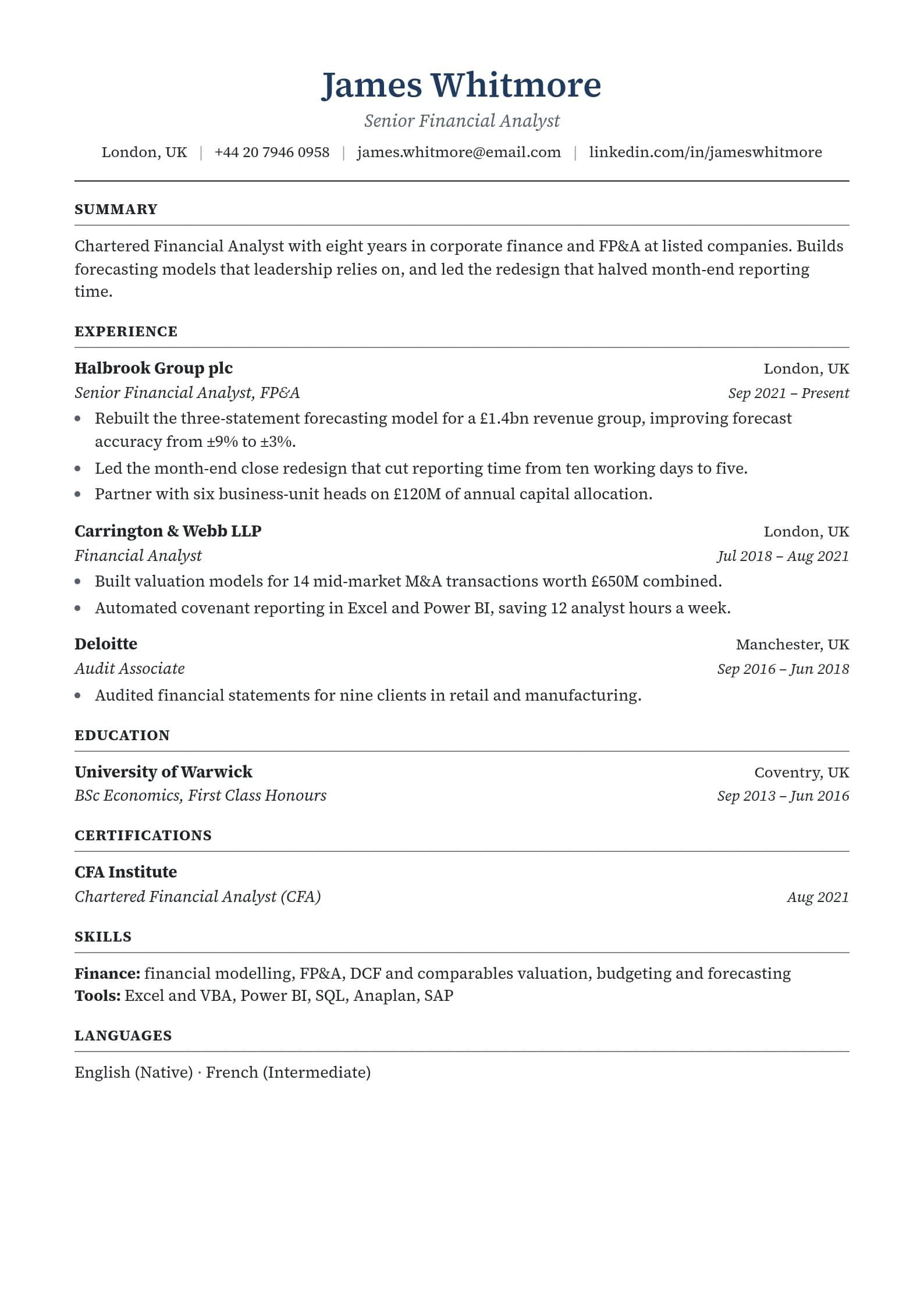
Build a resume that gets interviews
- ATS-optimized templates
- AI-powered writing
- Free to start
No credit card required
You applied ten days ago. You tailored the resume, wrote the cover letter, double-checked the spelling of the company name. Since then: an automated "we've received your application" email, and nothing else. You've refreshed your inbox more times than you'd like to admit, and you're stuck between two fears. If you follow up, will you look pushy? If you don't, will your application sit unread forever?
Following up is reasonable, professional, and sometimes the thing that gets your resume in front of a person. The trick is to follow up with the right person, at the right time, with something worth reading, and to know when to stop.
TL;DR: Find a real person to contact when you apply. Send a short first follow-up about one week after applying (or after the closing date), a second one about a week later that adds something new, and then stop and move on. Keep each message under 120 words, and never follow up if the ad asks you not to.
Should You Follow Up After Applying?
Yes, in most cases. A short, polite follow-up after applying is a normal part of job searching, and recruiters and hiring managers receive them all the time. It can remind a busy person to look at your application, show genuine interest in the role, and give you a chance to add one relevant detail.
There are three exceptions:
- The ad says not to. "No phone calls or emails, please" means exactly that.
- The process is clearly automated and large-scale, such as a high-volume hourly role with no named contact. Check the portal status instead.
- You've already been told the timeline. If the recruiter said "we'll be in touch by the 15th", wait until the 16th.
The Three-Touch Follow-Up Plan
Instead of one anxious email, plan your follow-up when you apply. Put the dates in your calendar and stop thinking about it in between.
| Touch | When | Channel | What it says |
|---|---|---|---|
| 0. The connection | The day you apply | LinkedIn or email | A short note that you've applied, if you can find the hiring manager or recruiter |
| 1. The check-in | About 1 week after applying, or a few days after the closing date | Email (or LinkedIn if that's all you have) | You applied, you're still keen, one line on why you fit |
| 2. The value add | About 1 week after touch 1 | The same channel | Something new: a relevant result, work sample, or answer to a question in the ad |
| Stop | After touch 2 with no reply | None | Move on; keep the contact for future roles |
Two follow-ups after the application is enough. Beyond that, the message stops being a reminder and starts being noise.
Step 1: Find a Real Person
A follow-up sent to a generic careers inbox rarely reaches anyone who decides. Spend ten minutes looking for a name:
- The job ad itself. Some list a recruiter or the hiring manager.
- LinkedIn. Search the company for the job title of the person the role reports to ("Head of Customer Success"), or for recruiters and talent acquisition staff at the company.
- The company's team or about page.
- Your network. A former colleague or classmate who works there can tell you who's hiring, and may offer to refer you, which is usually better than any follow-up.
Who to pick: for a small company, the hiring manager. For a larger company with an in-house recruiting team, the recruiter for that function. If you can't find either, a polite note via the application portal or careers inbox is still fine.
Step 2: Write the Check-In (Touch 1)
Short and specific beats long and enthusiastic. Aim for three or four sentences.
Subject: Application for Customer Success Manager (ref. CS-118)
Hi Priya,
I applied for the Customer Success Manager role last Tuesday and wanted to say how interested I am in it. In my current role I manage a book of 45 mid-market accounts and cut churn in my segment by a fifth last year, which seems close to what your team is working on. I'd be glad to share more detail or answer any questions.
Best regards, Sam Okafor sam.okafor@email.com · (555) 010-2290
What makes it work:
- The job title and reference number in the subject, so it's easy to find the application
- One line of fit, with a result, not a paragraph repeating your resume
- No question that demands effort ("Can you tell me where I am in the process?" asks them to go and look). An offer to help is easier to say yes to.
On LinkedIn
LinkedIn connection notes have a strict character limit, so keep it to two sentences:
Hi Priya, I've applied for your Customer Success Manager role and would love to connect. I manage 45 mid-market accounts and cut churn in my segment last year, so the role really caught my eye.
Step 3: Add Value (Touch 2)
The second follow-up only works if it gives the reader a new reason to look at your application. "Just checking in again" doesn't. Options that do:
- A relevant result you didn't mention: "We just closed our quarter, and my renewal rate came in at 96%."
- A short work sample: a portfolio link, a writing sample, a one-page plan for the first 90 days (only if it's genuinely useful and quick to read).
- A response to something in the ad or company news: "I saw you're launching in Canada; I supported our own Canadian expansion last year."
- A new credential: a certification you've just finished.
Subject: Re: Application for Customer Success Manager (ref. CS-118)
Hi Priya,
A quick follow-up on my application for the Customer Success Manager role. Since I last wrote, I've finished our quarterly renewals, with 96% of my accounts renewing, and I noticed your team is expanding into Canada, where I supported our own launch last year. If it's helpful, I'm happy to talk through how I'd approach onboarding for new regions.
Best regards, Sam
What to Do When They Reply
| Reply | What it means | Your next step |
|---|---|---|
| "We're still reviewing applications" | You're still in the running | Thank them, ask if there's a timeline, and follow up after it passes |
| "We've moved forward with other candidates" | The role is closed to you | Thank them, ask to be considered for future roles, and connect on LinkedIn |
| "Can you send your resume directly?" | They're interested, or the portal lost it | Send it the same day, tailored to the role |
| An interview invitation | It worked | Reply promptly with your availability |
| Nothing | Busy, or not a fit | Send touch 2, then stop |
A polite reply to a rejection is worth sending. Recruiters remember candidates who were gracious, and many roles reopen or new ones appear months later.
Follow-Up Mistakes to Avoid
- Following up the day after you apply. Give them a chance to read the applications first.
- Messaging several people at the same company with the same note. Pick one person.
- Writing an essay. If your follow-up needs scrolling, it's too long.
- Guilt or pressure. "I haven't heard anything and I'm disappointed" never helps.
- Calling repeatedly. One call, where a phone number is given and calls are welcome, is the maximum.
- Following up on a weak application. If your resume doesn't show the must-haves, a follow-up just draws attention to that. Strengthen it first with how to write a resume that passes ATS and gets read, and tailor it for the next role with how to tailor one resume to many job ads.
Track Every Follow-Up
Keep a simple spreadsheet with one row per application: company, role, date applied, resume version sent, contact name, touch 1 date, touch 2 date, and outcome. It stops you double-messaging people, and over a few weeks it shows which kinds of applications get replies. If you want to see where your search is leaking, enter your numbers in the free hiring funnel calculator.
Make the application worth following up
Before you follow up, make sure the resume you sent is doing its job. Upload it to the ATS checker for a score and specific fixes, or update it in the resume builder. Building is free, and your first PDF or Word download is free.
Frequently Asked Questions
How long should I wait to follow up after applying for a job?
About one week after applying, or a few days after the closing date if the ad lists one. If a recruiter has given you a timeline, wait until it has passed. Follow up once more about a week later with something new, then stop.
Is it okay to follow up on a job application by email?
Yes. Email is usually the best channel, ideally to the recruiter or hiring manager rather than a generic careers inbox. Use the job title and any reference number in the subject line and keep the message to three or four sentences.
How many times should I follow up on a job application?
Twice at most after applying: a short check-in after about a week, then one message that adds something new about a week later. If there's no reply after that, move on and keep the contact for future roles.
What should I say in a follow-up email after applying?
Say which role you applied for and when, that you're still interested, and one specific reason you're a good fit, ideally a result. Offer to share more information. Avoid asking them to check your status, and avoid repeating your whole resume.
Should I follow up on LinkedIn or by email?
Email is better when you have an address, because it's easier to forward to the right person. LinkedIn works when it's the only way to reach the recruiter or hiring manager; keep the message to two sentences.
Resumeza Team
The team behind Resumeza
The team that builds Resumeza's resume templates and ATS checker and writes its expert reviews..
Your resume is your first impression. Make it count.
Build an ATS-optimized resume that gets read, with AI help on every section.
No credit card required. Your first PDF or Word download is free; after that, Pro is $6.95 a month.
Continue Reading
View all articles
How to Tailor One Resume to Many Job Ads, Fast

Career Change Resume Summary: What to Write (Examples)

Resume Length by Career Stage: How Many Pages?

How to Turn Job Duties Into Achievement Bullets

How to Write a Resume That Passes ATS and Gets Read
Build a resume that gets interviews
Ready to build your resume?